Common Good Philanthropies Grantee Spotlight
Catalyzing Inclusive Innovation
Common Good Philanthropies partners with organizations across Wisconsin that are working to improve long-term services and supports for older adults and people of all abilities. Through our grantmaking, we invest in initiatives that strengthen leadership, expand opportunity, and build organizational capacity.
—
—
Funding Priority Areas
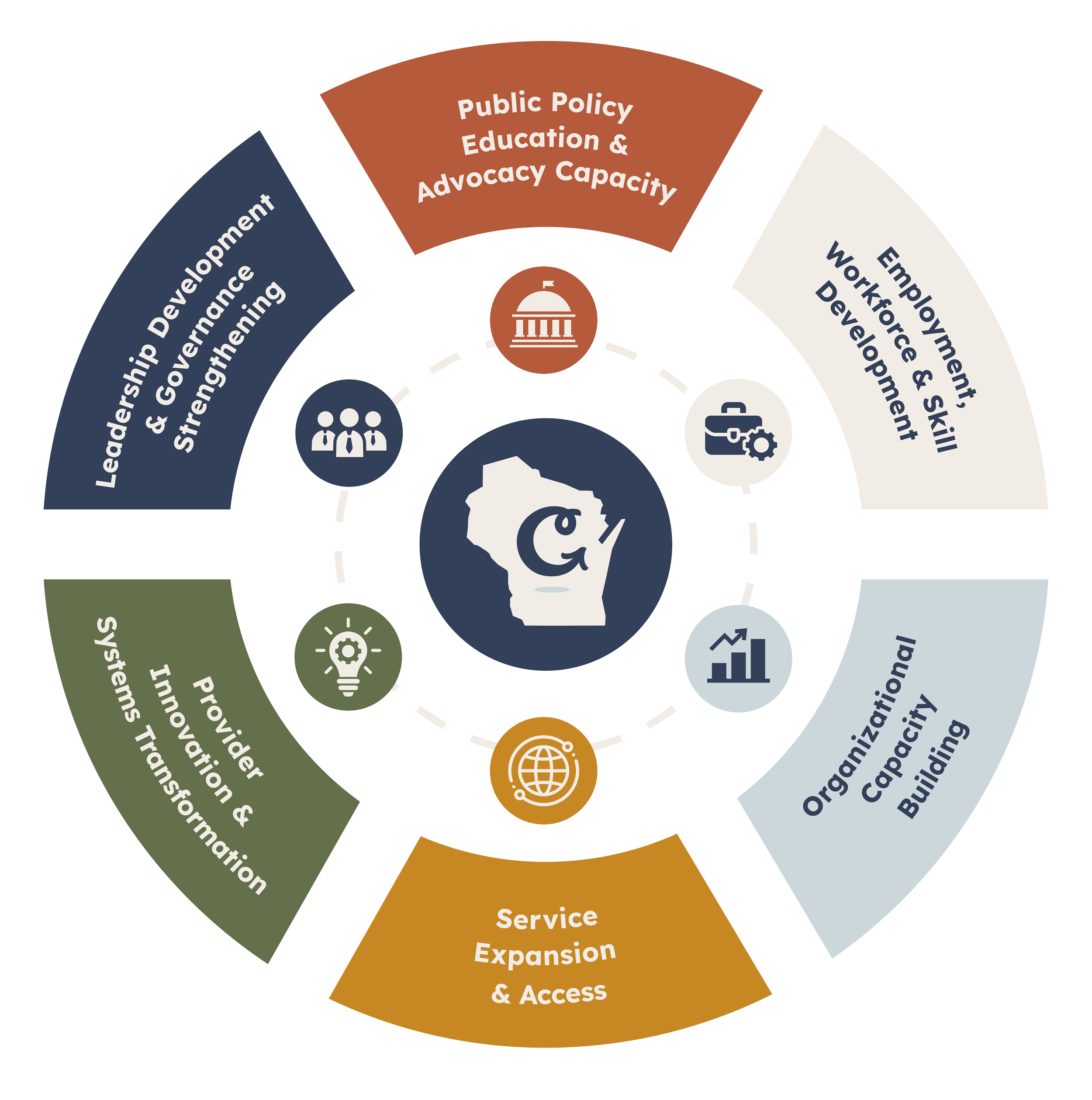
Strengthening Wisconsin's Long-Term Care Services & Supports Network
Our funding priorities reflect the many interconnected elements that make a strong and responsive support network. Rather than addressing these areas in isolation, we look for projects that advance several priorities at once: expanding access to services, strengthening organizations and the workforce, encouraging innovation, and building stronger connections across the sector.
Balancing Immediate Impact with Catalytic Change for Lasting Sustainability
The projects below are examples of grant-supported partnerships and initiatives:
Full project narratives available below.
-
ACAP developed a peer mentorship program that trains members with disabilities to support others as they navigate programs, build skills, and connect with community resources. The initiative creates leadership opportunities for participants while strengthening ACAP’s ability to serve new members. The mentorship curriculum also provides a model that other organizations can adapt to expand peer-led support within their organizations.
-
AFAR provides accessible recreation opportunities through its Open Gym program, where individuals of all abilities can participate in sports and physical activity. Adaptive equipment and inclusive programming allow participants to stay active while building social connections with family and peers. The initiative demonstrates how community-based recreation programs can expand opportunities for individuals with disabilities to engage in healthy, active lifestyles.
-
The Aging & Disability Resource Center of Dunn County is piloting the use of AI-powered care companions to reduce loneliness and improve well-being among older adults living independently. Through this initiative, participants engage with ElliQ, an interactive device designed to encourage social interaction, support daily routines, and connect users with community resources. The project is exploring how emerging technology can complement traditional supports and help older adults remain connected and engaged while aging in place.
-
Amery Regional Medical Center launched a program designed to improve the daily experience of patients with extended hospital stays. Volunteers lead creative and social activities that encourage engagement and reduce isolation for older adults receiving long-term care. The initiative explores new approaches for integrating enrichment programming into hospital care settings.
-
Aptiv is expanding a peer mentoring model that connects individuals with disabilities to trained mentors who share lived experience. Mentors support participants in building self-advocacy skills, setting goals, and increasing community engagement. The project is also exploring how peer mentoring could become a sustainable service within Wisconsin’s long-term care system.
-
DSPN developed a training series to support individuals who self-direct their services by hiring their own caregivers. Workshops provide practical tools for recruitment, training, and managing Direct Support Professionals. By equipping participants with these skills, the program strengthens the infrastructure that supports self-directed services across Wisconsin.
-
The Good News Project expanded access to durable medical equipment through its Mobile HELP Truck, which travels to rural communities where transportation barriers often limit access to needed supplies. By bringing equipment directly to local communities, the initiative helps individuals and caregivers obtain essential resources more easily.
-
Habitat for Humanity provides home modifications that allow older adults and individuals with disabilities to remain safely in their homes. Through ramp installations and other home improvements, the program addresses safety risks that often lead to falls or unnecessary moves from the home. These efforts help residents maintain independence while raising awareness about the importance of accessible housing in aging communities.
-
Hadley Organization connects older adults experiencing vision loss with educational workshops, peer support, and accessible learning resources. Through virtual programming and partnerships with community organizations and clinics, the initiative assists individuals in accessing tools and resources that support independence and daily living.
-
Journey21’s Life Academy prepares adults with intellectual and developmental disabilities for employment and independent living through classroom learning, internships, and community engagement. Participants build practical skills and confidence as they transition from school to adult life, and purposeful community participation.
-
The National Leadership Consortium’s Leadership Institute prepares emerging leaders within disability service organizations through training, mentorship, and applied leadership projects. The program strengthens leadership across the disability services field by equipping professionals with the skills and perspective needed to guide their organizations and contribute to a more effective long-term services and support system.
-
Portal supports individuals with disabilities in pursuing meaningful employment through job readiness training, job clubs, and employer partnerships. The initiative supports participants in gaining workplace experience while expanding inclusive hiring opportunities in local communities.
-
The State of Wisconsin Board on Aging and Long-Term Care pilot initiative explores new strategies for strengthening advocacy and support for older adults living in assisted living communities. By expanding volunteer engagement and testing new outreach approaches, the project aims to increase the reach and effectiveness of the Ombudsman program.
-
The Bridge to Hope developed programming that promotes healthy relationships and safety for older adults. Through education and community partnerships, the initiative raises awareness about risks such as exploitation and abuse while supporting older adults’ autonomy and well-being.
Ready To Innovate?
We invite you to think big and explore how we can drive systemic change together. Visit our grant page to learn more about our process and how to start a conversation about your boldest ideas.
We act as a catalytic partner, providing more than just funding; we offer the networks, trust, and collaboration needed to move beyond day-to-day crises. By walking alongside our grantees, we create the space for nonprofits to pause, dream, and innovate toward long-term sustainability. Our goal is to strengthen the entire ecosystem, reducing burnout and reinforcing the belief that lasting change comes from what is possible, not what is lacking.